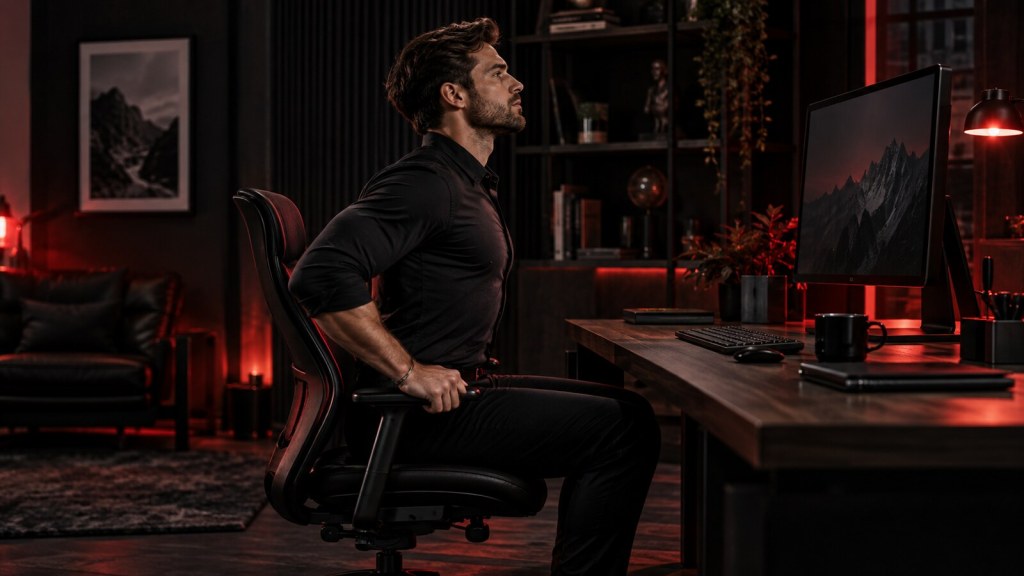
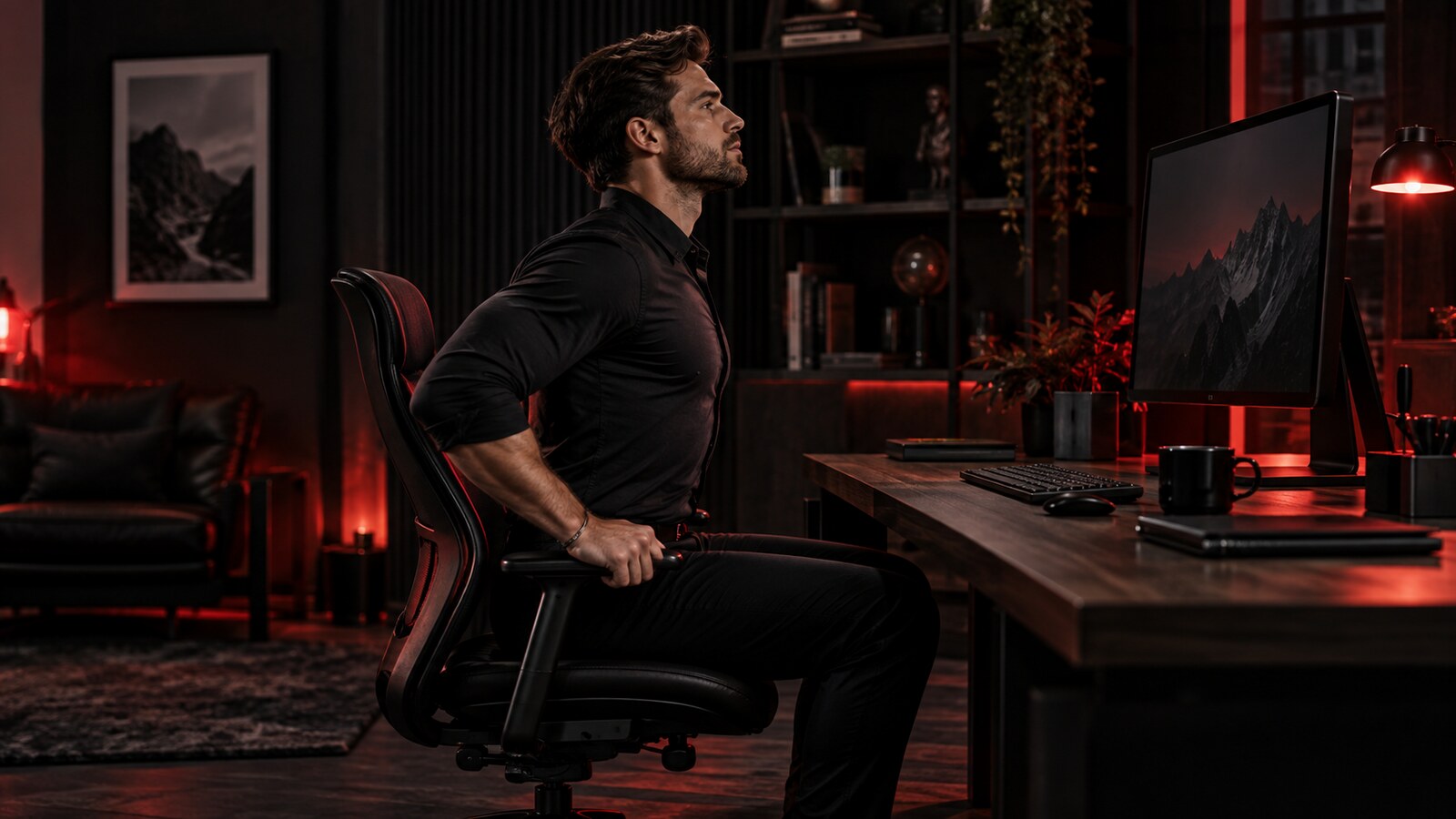
Ryan had built his shoulders, bought clothes that fit, and still looked smaller the moment he opened his laptop. His head drifted forward, chest collapsed, and eyes dropped toward the desk. He spent an hour in the gym building presence, then spent nine hours folding it away.
Posture changes how your body carries strength. A strong frame hidden behind rounded shoulders and a hanging head communicates fatigue before you speak. Better posture will not replace muscle, style, or confidence. It lets all three become visible.
Stop looking for one magical stretch or a brace that holds you upright while the rest of your habits stay weak. Build an environment, body, and awareness that make a strong position easier to maintain.
Posture Is a Skill, Not a Frozen Pose
There is no prize for sitting like a statue until your back aches. Posture includes how you sit, stand, walk, lift, and change positions. The goal is not rigid perfection. The goal is control.
The MedlinePlus guide to good posture emphasizes alignment during both movement and stillness. Your body needs enough mobility to reach useful positions, enough strength to control them, and enough awareness to stop collapsing for hours.
Use one immediate cue: stack ribs over pelvis, let the shoulders sit down and back without forcing them, keep the head over the torso, and breathe normally. If the position stops your breathing, you are posing rather than standing well.
Your Desk Is Training You
Every hour at a badly arranged desk practices the same collapsed pattern. A low screen pulls your eyes down. A chair that is too high leaves your feet searching. A distant keyboard drags the shoulders forward. Then you blame discipline for losing a fight your environment repeats all day.
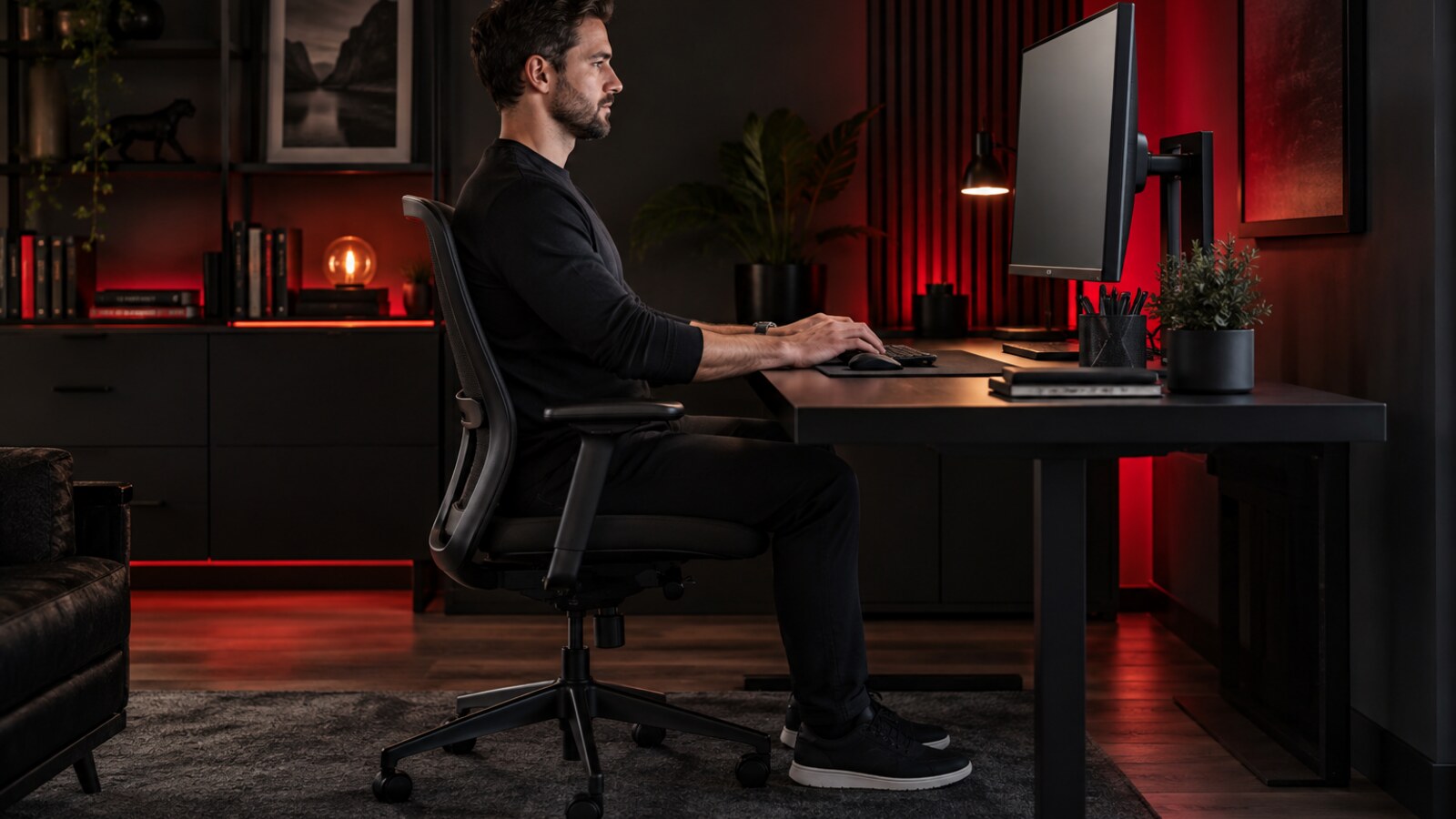
Set the station so strength is the default:
- Place the main screen roughly at eye level and directly in front of you.
- Keep the keyboard and mouse close enough that the elbows stay near the body.
- Set the chair so feet rest flat and the thighs are supported.
- Let the lower back meet the chair instead of perching on the front edge.
- Keep frequently used objects within easy reach.
The Mayo Clinic office-ergonomics guide gives the same practical direction: support the spine, plant the feet, keep shoulders relaxed, and bring the tools to your body.
Movement Beats the Perfect Chair
A perfect setup cannot rescue ten motionless hours. Change position before fatigue turns you into a question mark. Stand for calls. Walk during breaks. Look across the room. Reach overhead. Take several slow breaths with the ribs expanding instead of lifting the shoulders.
Set a forty-five-minute timer for one week. When it rings, stand for two minutes. Perform ten controlled shoulder-blade movements, walk, and reset the screen position. This is not softness. It is maintenance for a body expected to perform.
Strengthen What Holds You Up
You cannot stretch your way out of every weak position. Build the upper back, rear shoulders, trunk, and hips. These areas help you control the rib cage, shoulder blades, pelvis, and head while you work and move.
- Rows: pull with the elbows and finish without throwing the ribs forward.
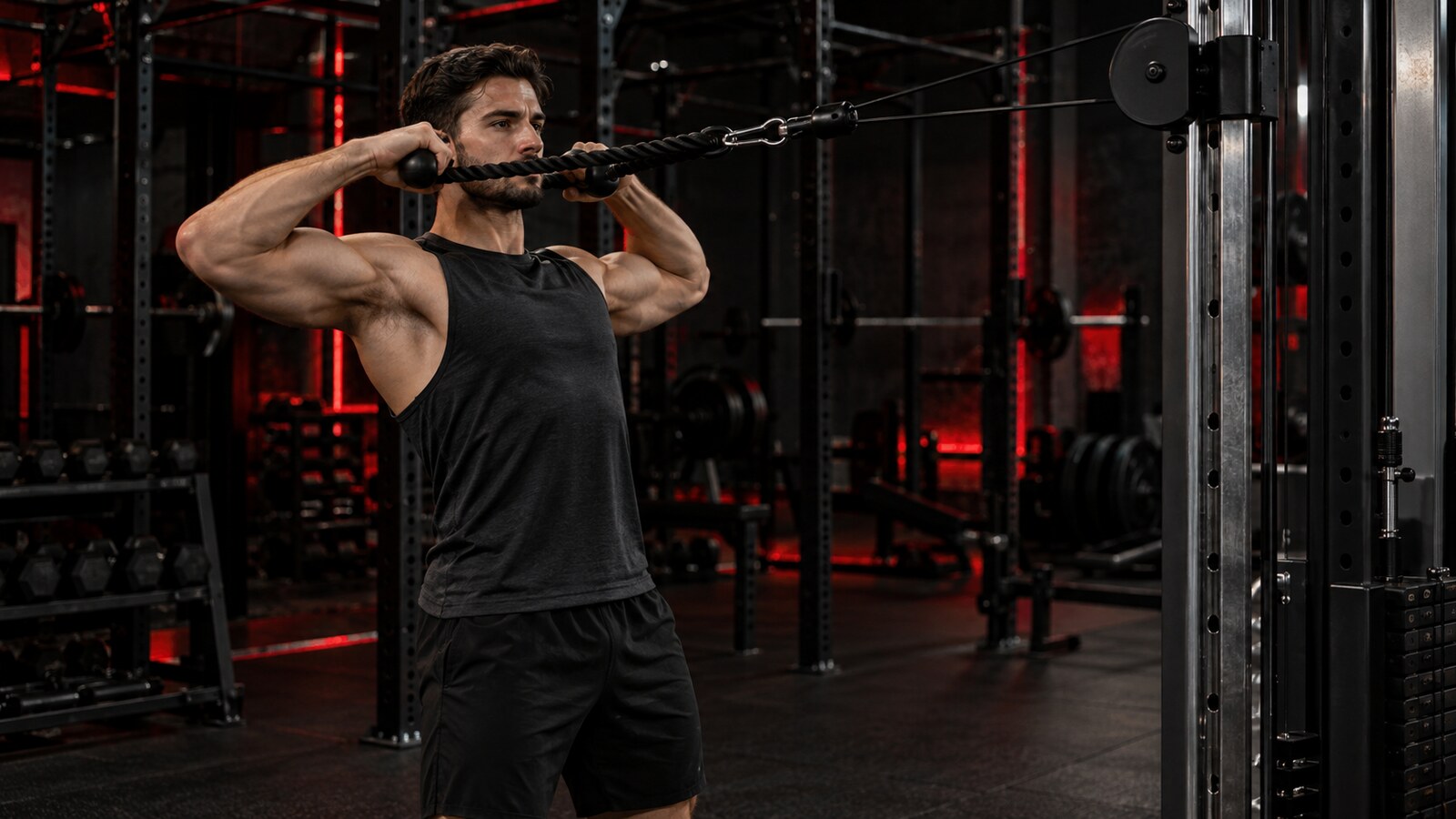
- Face pulls: use a light load and move through the shoulders instead of leaning back.
- Reverse flyes: control the return and stop chasing heavy weight.
- Dead bugs: keep the lower back controlled while the limbs move.
- Loaded carries: walk tall under load without shrugging or leaning.
- Split squats and hinges: build hips that can support a strong torso.
Do not build only the muscles you see in the mirror. Chest and front-shoulder work without balanced pulling can leave your program as forward-heavy as your desk habits. Follow our V-taper plan to build the lats and shoulders that sharpen your frame, then carry them properly.
Restore the Positions You Avoid
Tightness often reflects hours spent in one range. Use brief mobility work to reclaim what the day removes. Open the chest gently against a doorway. Extend the upper back over a stable support. Move the neck through comfortable ranges. Stretch the hip flexors without arching the lower back.
Mobility work should create access, not a war against your joints. Sharp pain, numbness, weakness, or symptoms traveling into an arm or leg deserve qualified medical assessment. Do not let pride turn a warning into a longer problem.
Carry Yourself Like Your Direction Matters
Posture is physical, but it affects social presence. Walk at a deliberate pace. Keep your eyes level. Let the arms move naturally. Occupy your space without spreading into other people’s space. When you speak, stop folding your chest and looking at the floor at the end of every sentence.
This is controlled aggression in visible form. You move toward the room rather than shrinking from it. You do not puff yourself into a costume or glare at strangers. You carry strength calmly.
Combine posture with the voice work in How to Develop a Deeper, More Confident Voice. A grounded body gives your breath and delivery a stronger base.
The Eight-Minute Daily Posture Reset
- Take five slow breaths while stacking ribs over pelvis.
- Perform eight gentle neck turns per side.
- Hold a doorway chest stretch for thirty seconds per side.
- Complete ten wall slides with controlled ribs.
- Perform twelve bandless prone reverse flyes or light cable face pulls.
- Complete eight dead bugs per side.
- Walk for two minutes with eyes level and shoulders relaxed.
Do this once daily for two weeks. Add two or three weekly strength sessions. Photograph your normal standing posture from the side at the start and after fourteen days. Do not pose. You are measuring the position your body chooses automatically.
Use a Four-Point Scoreboard
Track what changes instead of relying on a mirror mood. Each evening score four items: desk resets completed, posture routine completed, strength session completed, and hours spent with unnecessary phone hunching. Four points means you commanded the day. Zero means the environment commanded you.
For appearance, take monthly front and side photographs in the same clothes and lighting. For performance, track rows, carries, and controlled repetitions. For comfort, note when stiffness appears and what reduces it. Data keeps you from buying fantasies and quitting after three days.
Make Strength Visible
You want to look more powerful, move without constant stiffness, wear clothes better, and enter a room with presence. Posture will not create a life you have not built. It will stop hiding the work you already did.
Use our complete looksmaxxing guide to align posture with grooming, physique, and style. Then read How to Dress More Masculine so the clothes reinforce your frame instead of swallowing it.
Raise the screen today. Train your back this week. Set the timer. Walk like you have somewhere worth going. Stop spending your life folded over and then wondering why your presence disappears.
Frequently Asked Questions
Can I fix my posture with exercise alone?
Exercise helps, but daily positions and workstation setup matter. Combine strength, mobility, awareness, and frequent movement instead of expecting three gym sessions to erase an entire week at a bad desk.
Should I force my shoulders back all day?
No. Keep them relaxed and controlled rather than aggressively pinned. Good posture should allow normal breathing and movement.
How long until posture looks better?
You can change your position immediately, but making it natural takes repetition. Track two weeks of daily resets, then continue strength and workstation habits for several months.


Leave a Reply