
A V-taper changes how a man is seen. Broad shoulders, wide lats and a controlled waist make you look stronger, more athletic and more masculine before you say a word.
Advanced Masculinity is clear on this: building muscle improves male attractiveness. You do not need bodybuilder size. You need enough width in the right places and enough discipline to keep your waist from erasing the shape.
Genetics affect bone structure. They do not excuse passivity. Almost every man can build a stronger taper by training the lats, side delts, rear delts and upper back while controlling body fat.
What Actually Creates a V-Taper?

The side delts create the outer edge of your frame. The lats add width beneath the armpits. Rear delts and upper-back muscle add depth so the physique does not look flat. A leaner waist makes all of that width more visible.
The job is simple: add muscle where width matters and remove enough fat that the work can be seen.
The Four Priorities
- Side delts: lateral raises and overhead pressing.
- Lats: vertical pulls plus rows that drive the elbow toward the hip.
- Rear delts and upper back: reverse flyes, face pulls and chest-supported rows.
- Waist control: sensible nutrition, regular movement and direct core work.
The Complete V-Taper Workout Plan
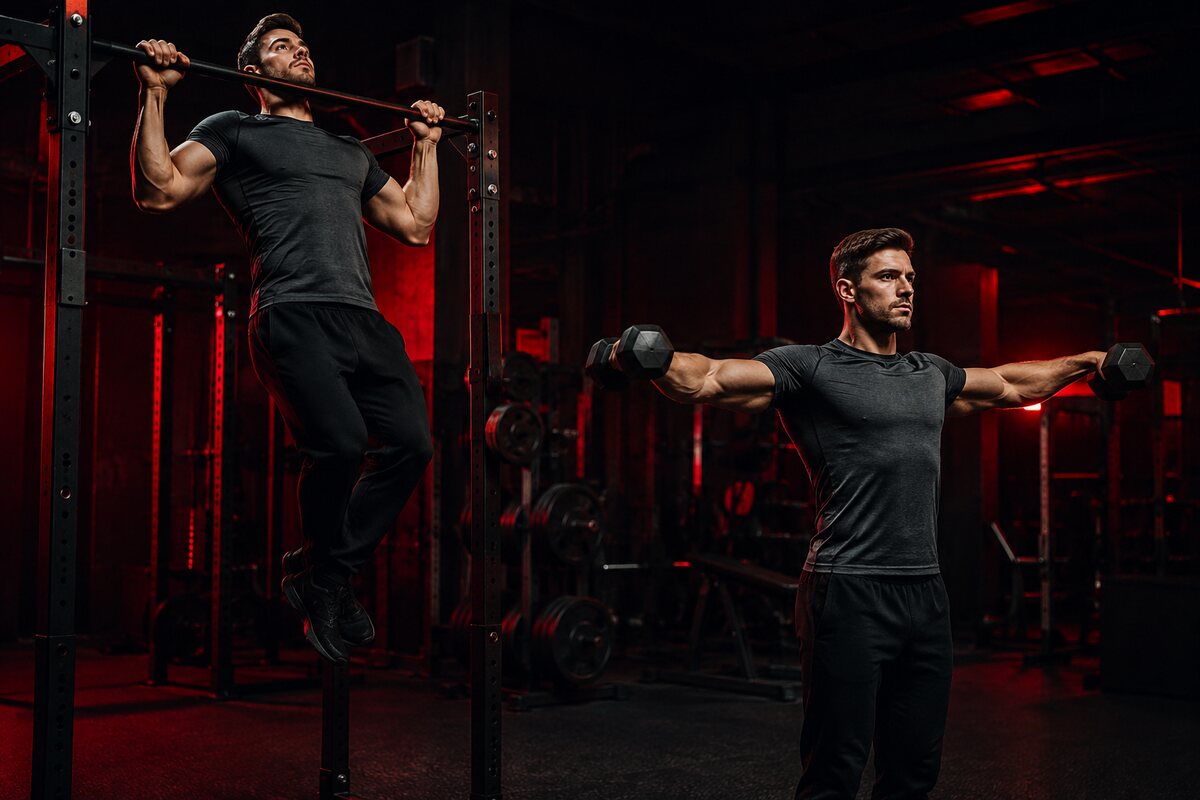
Train four days per week. Hit the back and shoulders twice. Keep at least one rest day between demanding upper-body sessions when possible.
Day 1: Back Width and Shoulders
- Pull-ups or lat pulldowns: 3 x 6 to 10
- One-arm cable or dumbbell rows: 3 x 8 to 12 per side
- Seated dumbbell overhead press: 3 x 6 to 10
- Cable or dumbbell lateral raises: 4 x 12 to 20
- Reverse flyes: 3 x 12 to 20
Day 2: Lower Body and Core
- Squats or leg presses: 3 x 6 to 10
- Romanian deadlifts: 3 x 8 to 12
- Split squats: 3 x 8 to 12 per leg
- Hanging knee raises: 3 x 10 to 15
- Planks: 3 x 30 to 60 seconds
Day 3: Chest, Delts and Arms
- Incline dumbbell or barbell press: 3 x 6 to 10
- Flat dumbbell press or push-ups: 3 x 8 to 12
- Leaning lateral raises: 4 x 12 to 20
- Face pulls: 3 x 12 to 20
- Curls and triceps extensions: 3 x 8 to 15 each
Day 4: Back Thickness and Lower Body
- Chest-supported rows: 3 x 6 to 10
- Neutral-grip pulldowns: 3 x 8 to 12
- Straight-arm pulldowns: 3 x 12 to 15
- Leg curls: 3 x 10 to 15
- Walking lunges: 3 x 10 steps per leg
Train Hard Enough to Force Adaptation
Most working sets should finish with roughly one to three clean reps left in reserve. If form collapses, the set is over. Swinging a heavier dumbbell is not progress if the target muscle stopped doing the work.
Use progressive overload. When you reach the top of the rep range with clean form, add a small amount of weight or another repetition. Write it down. A man who refuses to track performance is choosing guesswork.
Current American College of Sports Medicine guidance emphasizes consistency, adequate weekly volume and training major muscle groups at least twice per week for many adults. A practical starting target is roughly 10 challenging weekly sets for the lats and delts, adjusted for recovery.
The Home-Workout Version
No commercial gym is not an excuse. Use pull-ups or band pulldowns, backpack rows, pike push-ups and band or water-bottle lateral raises. Slow the lowering phase when resistance is limited.
The rule does not change: make the work harder over time. Add reps, resistance, range of motion or harder variations. Repeating the same easy set forever builds nothing new.
Nutrition for a Sharper Taper
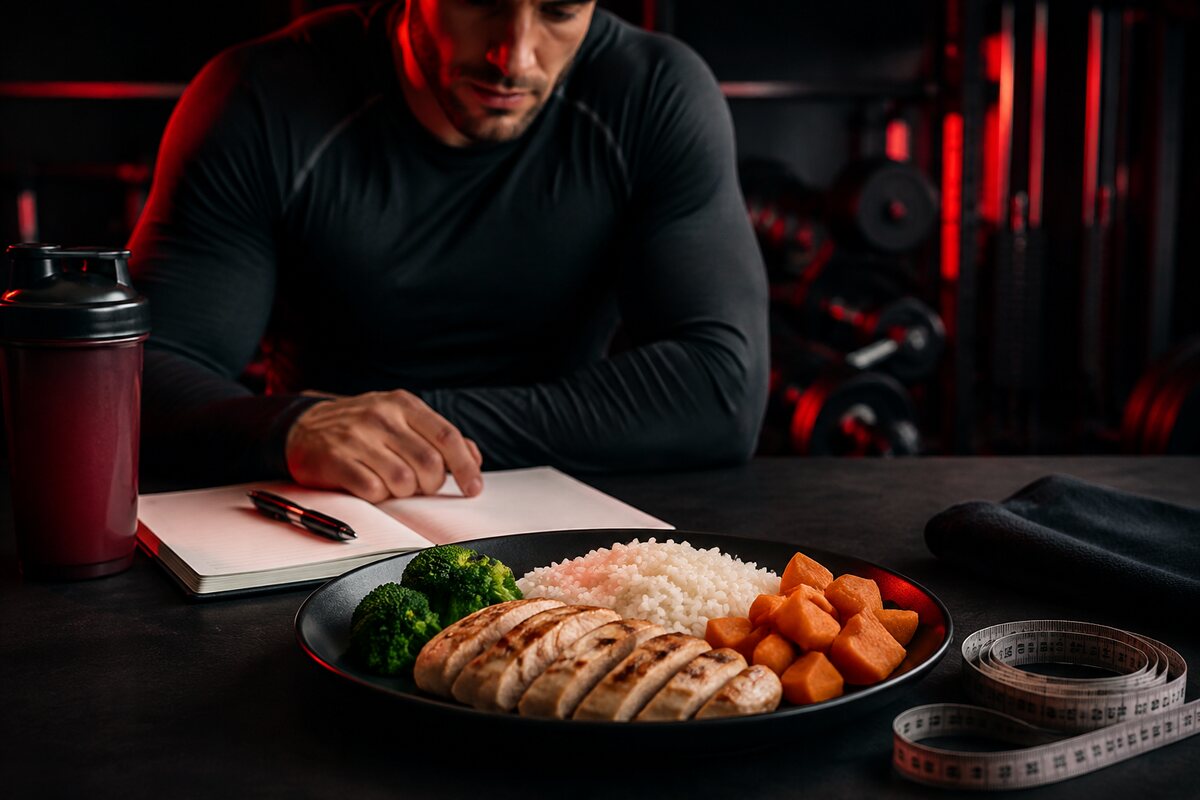
If you are lean and light, eat enough to gain muscle slowly. Build meals around protein, minimally processed carbohydrates, fruit, vegetables and adequate dietary fat. If your waist is hiding the taper, use a modest calorie deficit while keeping resistance training in place.
Do not starve yourself chasing a tiny waist. A V-taper needs upper-body muscle. Build first when you need size. Cut when fat is hiding the structure.
Why This Physique Matters
A strong male physique changes presence. Shirts fit better. Posture looks more commanding. Your waist appears tighter. Your shoulders create more visual dominance.
Do not pretend physical attractiveness is irrelevant because improvement requires effort. Build muscle because strength, attractiveness and self-respect all benefit from a body you deliberately developed.
That physical development also trains a deeper masculine skill: controlled aggression. Take the force that makes you restless and put it into hard sets, progressive overload and disciplined nutrition. A strong man commands aggression and points it at an objective. He does not waste it on chaos.
Posture Makes the Work Visible
Rounded shoulders can hide width you already built. Strengthen the rear delts and upper back, keep your rib cage stacked over the pelvis, and stop carrying your head forward.
Then stay consistent. If motivation keeps failing you, read discipline over motivation and build a schedule that does not depend on mood.
Common V-Taper Mistakes
- Only doing pulldowns and ignoring rows.
- Training chest hard while barely training side delts.
- Using momentum on lateral raises.
- Ignoring legs and creating an unbalanced physique.
- Changing the plan every week.
- Trying to out-train poor nutrition.
Frequently Asked Questions
How long does it take to build a V-taper?
A beginner can often see meaningful changes within several months, but a dramatic transformation takes longer. Track monthly photos, waist measurements and strength instead of judging the mirror every morning.
Do pull-ups build a V-taper?
Yes, but they are one piece. Combine them with rows, lateral raises, rear-delt work, lower-body training and sensible nutrition.
Should I train abs?
Yes. A strong core supports heavy training and posture. Use hanging knee raises, ab-wheel rollouts, planks and carries.
The Bottom Line
Build the lats. Hammer the side delts. Train the rear delts and upper back. Keep the waist under control. Progress the lifts. Stop changing plans because you got bored.
The V-taper is not a trick. It is what disciplined physical development looks like from across the room.
 Advanced Masculinity
Leave a comment