Adrian owned enough clothes to fill two wardrobes and still looked unfinished. One day he dressed like a streetwear advertisement. The next day he copied an executive he saw online. Every outfit belonged to another man.
He did not need more fabric. He needed a standard.
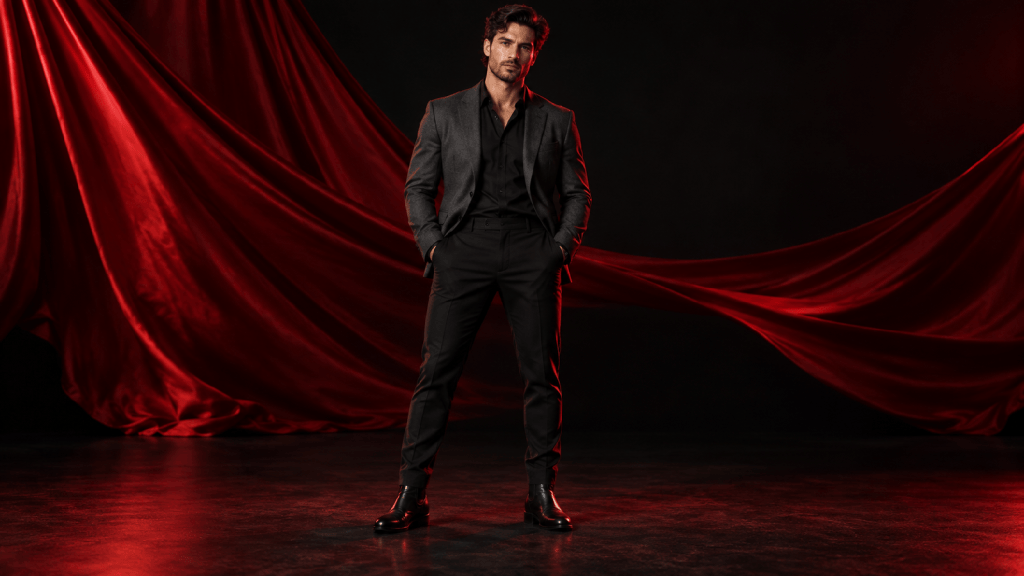
Masculine style is not a costume, a logo collection, or an attempt to look dangerous. It is visual command. Your clothes should strengthen your proportions, match your environment, and tell the world that you make deliberate decisions.
Your Clothes Speak Before You Do
People make fast judgments. You can resent that fact or use it. A clean, coherent appearance signals awareness, competence, and respect for the moment. A chaotic outfit signals that you either did not notice or did not care.
This does not mean dressing for universal approval. It means taking control of the signal. The 2026 return of sharper office dressing shows that tailoring, uniforms, and purposeful workwear still carry force even inside a casual culture. Trends move. Structure survives.
Your end goal is simple: look like the same capable man at the gym, on a date, in a meeting, and walking through the city. Different levels of formality, same identity.
Build a Stronger Silhouette
Masculine clothing should normally create clean shoulders, controlled space through the torso, and an uninterrupted line down the body. It should not strangle you or hide you inside excess cloth.
- Shoulders: seams should end near your natural shoulder unless the garment is intentionally structured.
- Chest: fabric should lie cleanly without pulling buttons or collapsing into folds.
- Waist: enough shape to show a torso, enough room to move and breathe.
- Leg line: trousers should fall cleanly instead of stacking into a heap.
- Length: jackets and shirts must respect your proportions instead of cutting you in half.
Fit advice is not a demand that every man chase one body type. It is a demand that you stop buying clothes for an imaginary body. Dress the man who exists today, then keep building the stronger body you want. Our fitness guide for men handles that mission.
Fit Beats Price and Branding
An expensive jacket with collapsing shoulders still looks wrong. A simple jacket that follows your frame can look authoritative. The label cannot rescue bad proportions.
Check the Hard-to-Alter Areas First
Jacket shoulders, coat length, rise, and the basic shape of a garment are expensive or impossible to transform well. Buy those correctly. Sleeves, trouser hems, and modest waist suppression are easier for a competent tailor to adjust.
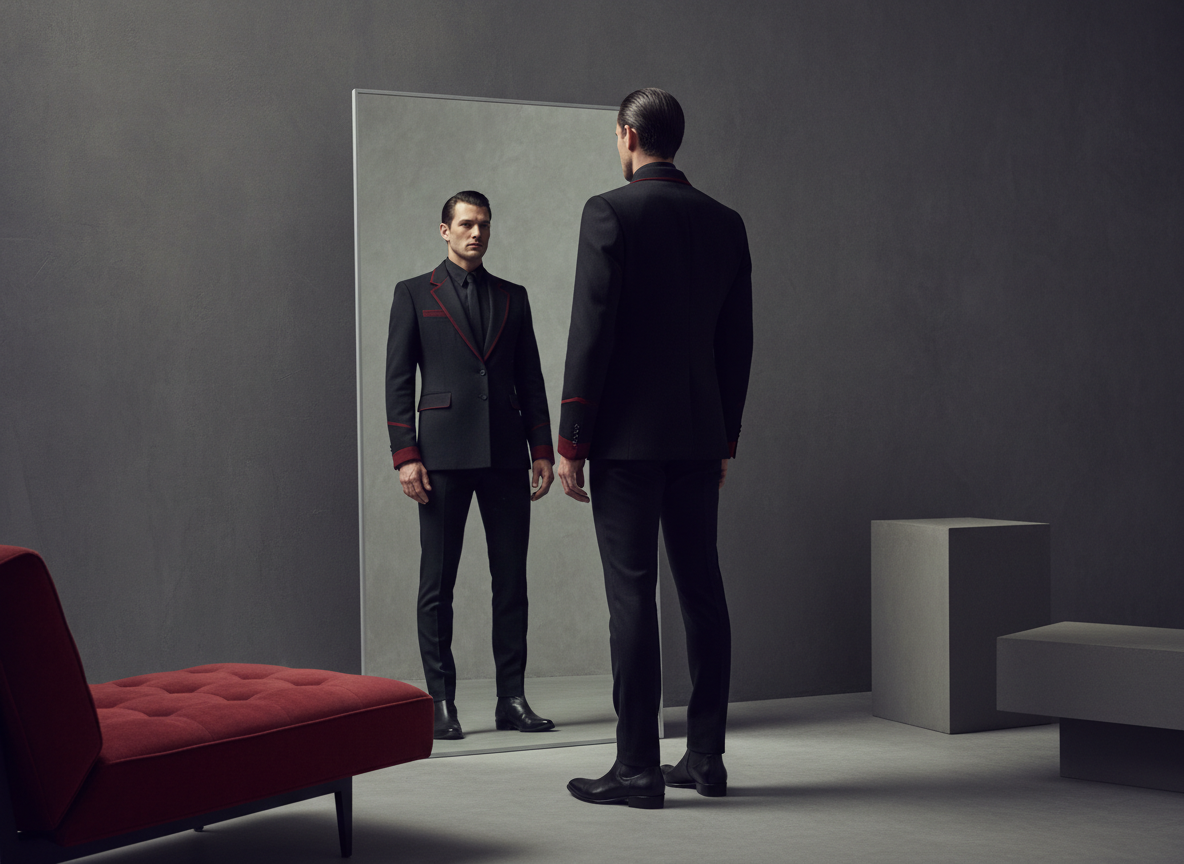
Use a fit checklist such as Put This On’s classic garment-fit guide, then judge the mirror without emotion. Pulling, bubbling, excessive stacking, and constant adjustment are evidence.
Use Movement as the Test
Sit down. Reach forward. Walk. Raise your arms. Clothing that only works while you stand frozen in a fitting room is not serving your life. Authority looks relaxed because the man can move without fighting his outfit.
Choose a Controlled Color System
A masculine wardrobe does not require permanent black. It requires colors that cooperate.
Build the base with charcoal, navy, white, cream, olive, brown, dark denim, and black. These colors combine easily and let texture, fit, and your face carry attention. Add one or two controlled accents such as burgundy, forest green, rust, or a deeper blue.
Use contrast deliberately. Men with higher contrast between hair, skin, and eyes can often carry sharper contrast in clothing. Lower-contrast coloring often looks stronger with quieter transitions. Test this in natural light. Your mirror is more useful than a rigid internet rule.
Do not wear six competing statements. One focal point is enough: a strong coat, a textured jacket, a clean watch, or a rich color near the face.
Build Three Masculine Uniforms
A uniform removes morning indecision without making you boring. You are creating reliable combinations, not wearing identical clothes every day.
1. The Off-Duty Uniform
Start with a substantial plain T-shirt, straight or gently tapered dark denim, and clean boots or restrained sneakers. Add a denim jacket, leather jacket, overshirt, or structured casual coat when weather allows.
The standard: no stretched collar, no accidental stains, no trousers pooling over the shoe, and no billboard logos doing the work your physique and presence should do.
2. The Smart-Casual Uniform
Use a knit polo, Oxford shirt, or fine-gauge crewneck with well-fitting chinos or wool trousers. Add an unstructured sport coat or clean outer layer. Choose leather shoes, loafers, boots, or minimal sneakers based on the environment.
This uniform handles dates, dinners, offices, and social events because it shows effort without looking ceremonial. Pair it with the principles in our first-date guide when the night matters.
3. The Authority Uniform
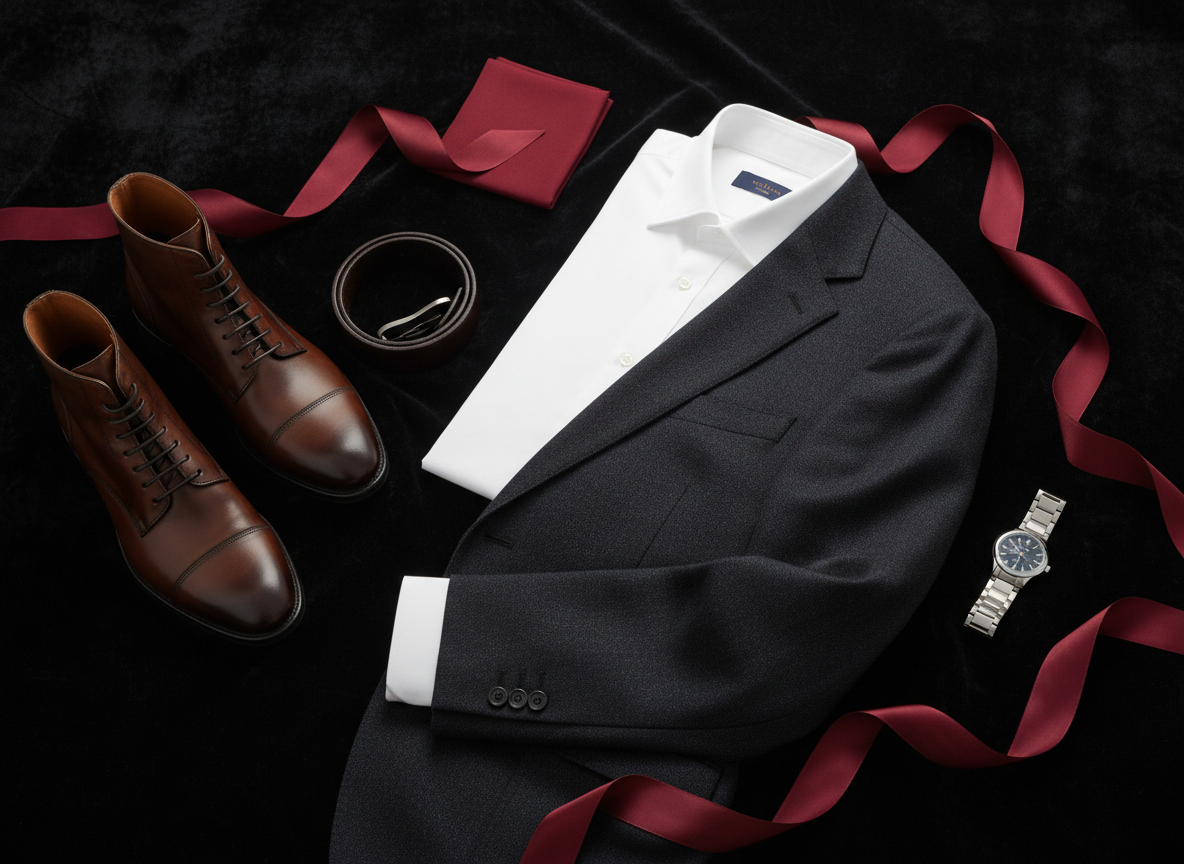
For serious rooms, use a dark navy or charcoal suit, a crisp shirt, and polished leather shoes. Add a tie when the room calls for it. The suit should frame you, not announce that you rented adulthood for one evening.
Keep accessories restrained. A well-chosen watch can finish the line without begging for attention. Study our guide to stylish watches for men under $500 if you need that final detail.
Texture Creates Depth Without Noise
When colors stay controlled, texture makes the outfit feel expensive and intentional. Wool, suede, denim, leather, flannel, heavy cotton, and knitwear each catch light differently. Combine smooth and rough surfaces instead of piling on patterns.
A charcoal wool trouser, black knit, and brown suede jacket can hold more presence than a loud designer piece because the eye sees depth and structure. Quiet does not mean weak.
Grooming Must Match the Standard
Clothing cannot overpower neglected skin, uncontrolled facial hair, dirty shoes, or a haircut that lost its shape weeks ago. Your presentation is one system.
- Keep hair intentionally cut and styled.
- Choose clean-shaven or maintain deliberate facial-hair lines.
- Use the simple skincare routine for men.
- Clean and maintain footwear.
- Use scent with restraint and purpose through a three-fragrance rotation.
A sharp outfit with careless grooming creates contradiction. Eliminate it.
Style Requires Controlled Aggression
Controlled aggression appears in style as commitment. You choose the silhouette, accept that some people will prefer something else, and wear it without constant self-checking.
Do not confuse conviction with peacocking. The loudest man is rarely the strongest presence. A powerful appearance applies pressure through fit, posture, restraint, and certainty. It does not scream for witnesses.
Women notice men who look deliberate. Employers and peers notice as well. Clothing cannot manufacture competence, but it can stop hiding the competence you already built.
The 30-Minute Wardrobe Audit
- Remove everything that is damaged beyond repair.
- Separate items that do not fit your current body.
- Build one complete off-duty outfit.
- Build one complete smart-casual outfit.
- Build one complete authority outfit.
- Photograph each outfit from the front, side, and back.
- Write the three genuine gaps. Buy nothing outside that list for thirty days.
Measure success by complete outfits, not the number of pieces owned. If a new item cannot combine with at least three things you already wear, it has not earned space.
Frequently Asked Questions
Do masculine clothes have to be tight?
No. They should create a deliberate silhouette and allow movement. Tight fabric that pulls and restricts you looks insecure, not strong.
Can a short man dress with more presence?
Yes. Use correct lengths, cleaner vertical lines, restrained contrast, and trousers that do not stack. Proportion matters more than height.
How many colors should an outfit use?
Two or three main colors are an easy standard. Texture and tonal variation can add depth without creating visual chaos.
Should I follow current trends?
Use trends selectively after your fit, palette, and uniforms are established. A trend should sharpen your identity, not replace it.
Dress Like Your Decisions Matter
You do not need to look perfect. You need to look intentional. Build the silhouette. Control the palette. Create three uniforms. Maintain the details. Then put your attention back on the mission.
Tonight, build and photograph one complete outfit that makes you stand taller. Anything that weakens the line gets corrected, tailored, or removed.


Leave a Reply