
Alex had talked about seeing another country for four years. Every plan depended on friends who cancelled, partners who changed their minds, or a perfect week that never arrived. At thirty-one, he realized the truth: he was not waiting for company. He was waiting for courage.
He booked five nights alone. The first dinner felt awkward. The first wrong turn exposed how little attention he paid at home. By the third day he was navigating the city, starting conversations, solving problems, and making decisions without a committee.
Solo travel is not running away from your life. Done properly, it is compressed training in self-command. You plan, adapt, protect yourself, meet strangers, and discover whether your confidence survives when nobody familiar is there to carry the mood.
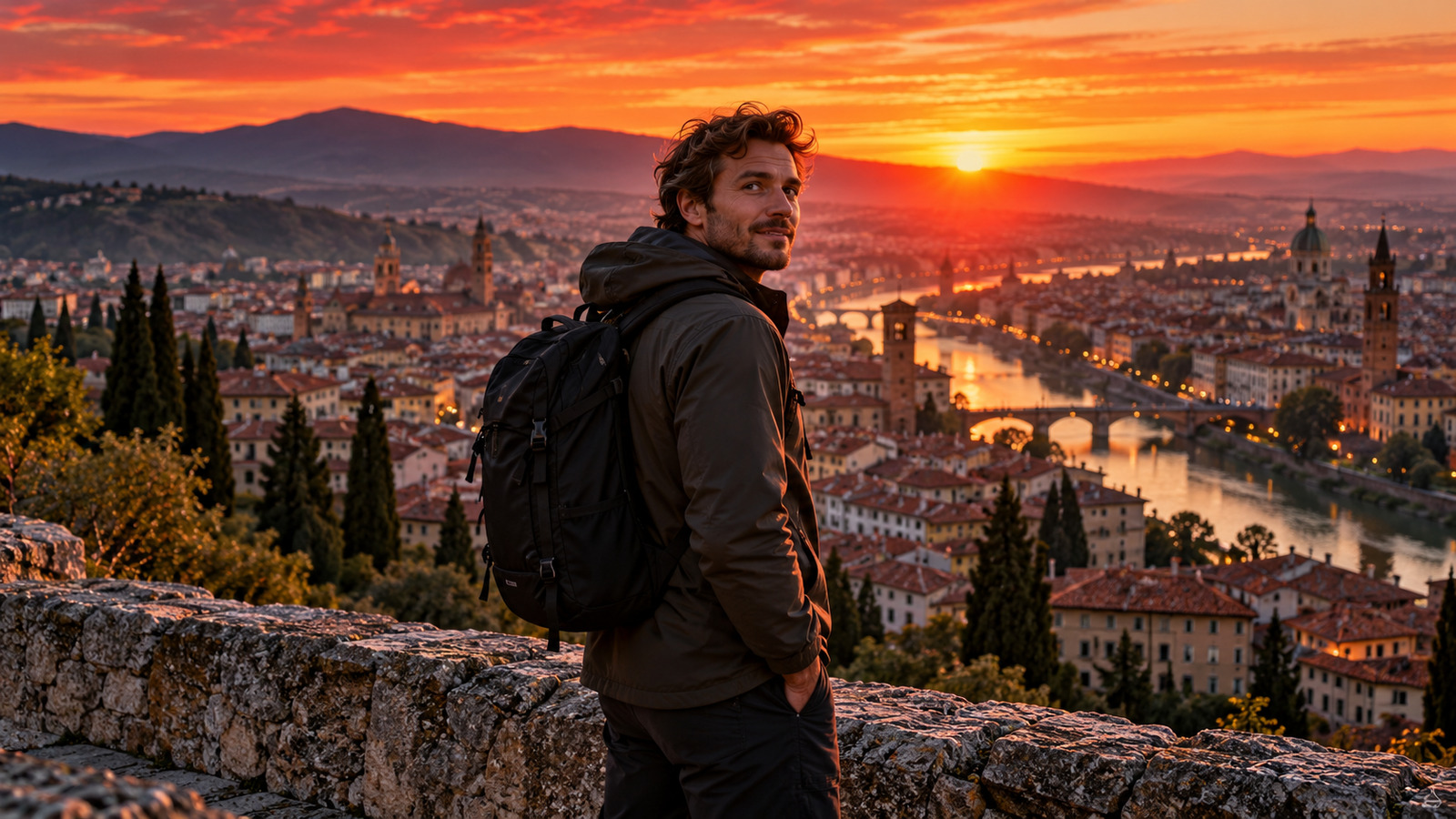
Stop Waiting for Permission to Live
Men waste years trying to coordinate every ambition with other people’s schedules. That habit reaches beyond travel. You delay the course, the move, the business, the approach, and the hard conversation because nobody has joined you.
A solo trip breaks that dependency. You choose a destination, accept the responsibility, and move. The same controlled risk-taking taught in taking calculated risks applies here. Courage is not refusing to plan. Courage is planning well and acting before comfort gives approval.
Travel interest remains strong in 2026, and current trend reports show that meeting new people is a major motive for many travelers. The opportunity is real, but so is the temptation to treat the trip as content instead of experience. Your purpose is not to prove online that you were somewhere. It is to return more capable than you left.
Choose the Right First Trip
Your first solo journey should demand attention without creating unnecessary chaos. Choose a place with reliable transportation, a manageable language barrier, clear entry rules, and a safety profile you can research. Three to seven nights is enough to test yourself without turning the trip into an endurance contest.
- Check official entry requirements and travel advisories.
- Understand the neighborhoods you will enter and avoid.
- Estimate lodging, transportation, food, activities, and an emergency reserve.
- Learn how you will reach your lodging after arrival.
- Choose two anchor activities and leave controlled room for exploration.
Do not confuse recklessness with masculine freedom. Landing after midnight with no address, no local transport plan, and no working way to communicate is not edge. It is laziness creating a problem for your future self.
Build a Plan That Survives Friction
Keep copies of important documents separate from the originals. Share your itinerary and lodging details with one trusted person. Know how to contact local emergency services. Review health guidance for the destination. Keep enough accessible money to solve a transport or lodging problem without panic.
Create a simple daily structure: one primary objective, one social action, and one open block. This prevents the trip from collapsing into aimless wandering while preserving the freedom that makes solo travel valuable.
Build redundancy into the essentials. Know a second route to your lodging. Keep the address written somewhere that does not depend on battery power. Learn the local transport cutoff time. Carry only what you can control without constant anxiety. Preparation gives you room to be spontaneous because one failed connection, closed station, or changed reservation does not destroy the entire day.
Before you leave each morning, check the weather, route, return plan, and one local condition that could affect movement. Five minutes of attention prevents hours of avoidable confusion.
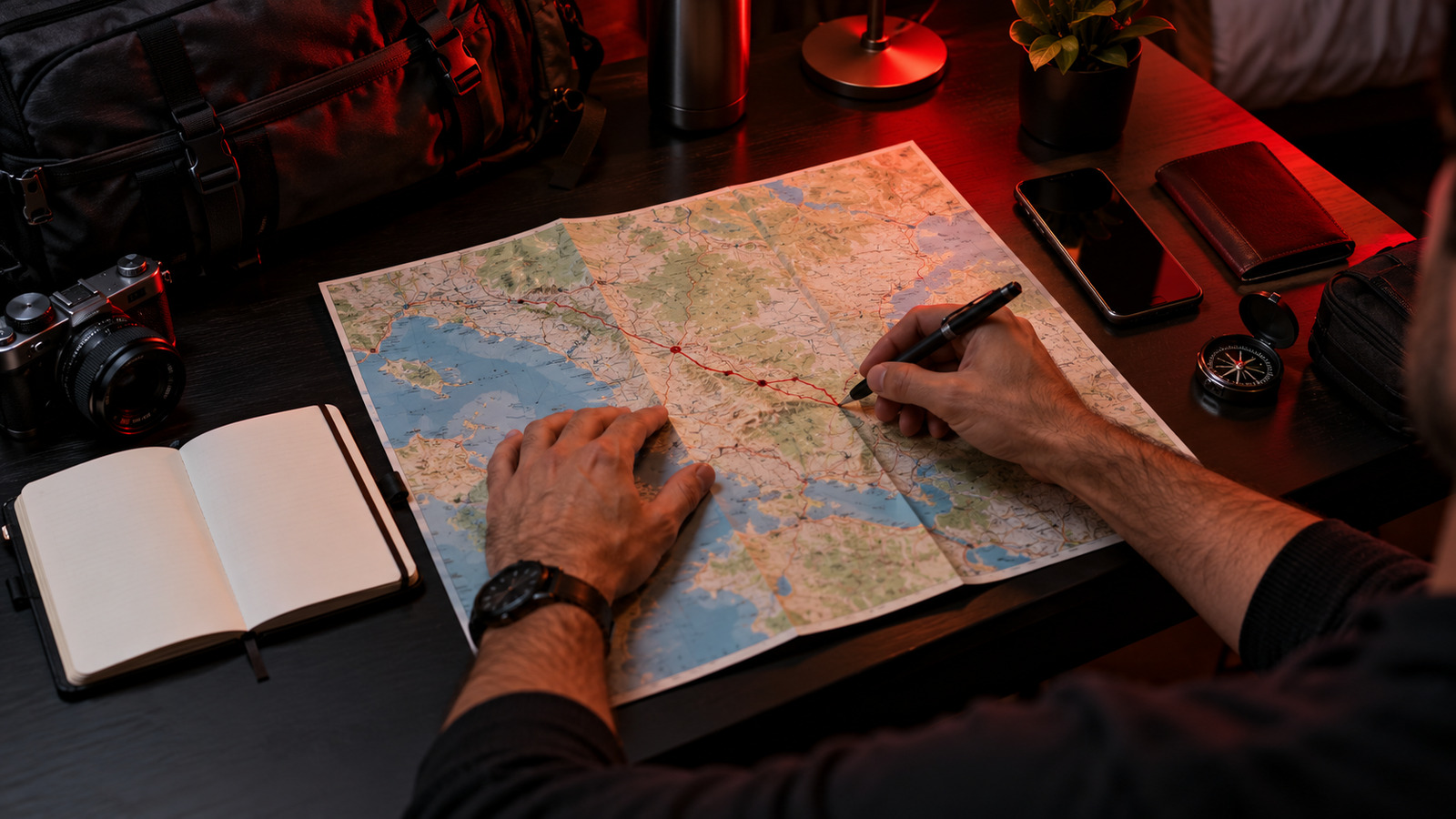
Travel With Situational Awareness
You are responsible for your own security. Pay attention to exits, crowd behavior, transportation routes, and changes in atmosphere. Do not advertise confusion in isolated places. Do not become so intoxicated that another person controls your movement. Do not follow a stranger because you are afraid of appearing rude.
The habits from situational awareness for men become practical abroad: look up from the screen, trust changes in context more than social pressure, and leave early when a setting turns wrong. Controlled aggression includes the willingness to say no, create distance, and exit without explaining yourself.
If someone pressures you, use direct language: “No. I am leaving.” Move toward populated, staffed, well-lit areas. Safety outranks politeness. A stranger’s opinion does not deserve authority over your instincts.
Use the Trip to Build Social Courage
Solo travel can become lonely if you hide behind a screen and wait for the city to entertain you. Start conversations. Ask a local a specific question. Join a small group activity. Sit where interaction is possible instead of retreating to the safest corner.
- Ask someone what visitors usually misunderstand about the city.
- Invite another solo traveler to join you for a meal.
- Learn ten useful phrases and use them even if your accent is imperfect.
- Spend one evening in a social setting without using your phone as armor.

You will sometimes be rejected, misunderstood, or ignored. Good. That teaches you that a small social failure does not end the night. The cure for male loneliness is not endless analysis. It is repeated participation in the world where relationships can form.
Do Not Use Travel to Escape Your Problems
A new city can interrupt your routines, but it cannot permanently rescue you from a life you refuse to build. If you are broke, undisciplined, isolated, and without direction, a flight gives you scenery. It does not give you structure.
Travel with a question or objective. Test your independence. Practice speaking to strangers. Study how another culture organizes work, family, public space, or hospitality. Walk without constant digital stimulation. Use the principles of digital minimalism so the trip enters your mind instead of disappearing behind a camera roll.
The Seven-Day Solo Travel Test
- Day 1: Navigate from arrival to lodging without panic and walk the immediate area.
- Day 2: Complete one planned activity and ask a local for one recommendation.
- Day 3: Eat alone without using your phone for distraction.
- Day 4: Join a group activity and start three conversations.
- Day 5: Take a controlled detour beyond the obvious visitor route.
- Day 6: Spend two hours offline observing, writing, and deciding what must change at home.
- Day 7: Review every problem you solved and choose one standard to carry back.
Measure the trip by decisions made, conversations started, problems solved, and moments when you acted despite discomfort. Photographs are memories. These behaviors are evidence that you became more capable.
Frequently Asked Questions
Is solo travel safe for men?
No trip is risk-free. Research the destination, follow current official guidance, keep awareness high, control intoxication, and leave situations that turn wrong.
What if I feel lonely?
Expect some discomfort. Use it as the signal to participate, not retreat. Join an activity, speak to someone, call home briefly, then return to the trip.
Do I need a long international trip?
No. A weekend alone in an unfamiliar nearby city can test planning, navigation, independence, and social courage without a large budget.
Book the Experience That Demands More From You
Stop handing your life to the calendars of men who are not coming. Pick a realistic destination. Research it. Set the budget. Choose the date. Then go.
You should return with more than souvenirs. Return with sharper awareness, greater social courage, better judgment, and proof that you can enter uncertainty without surrendering command. That man does not merely travel better. He lives better.


Leave a Reply