
Evan stepped off the train with headphones sealed over both ears, eyes fixed on his phone, and no idea who had followed him onto the platform. He was not weak. He was absent.
Modern life trains men to move through public space half-asleep. Screens consume the eyes. Noise blocks the ears. Convenience replaces judgment. Then men call awareness paranoia because paying attention feels unfamiliar.
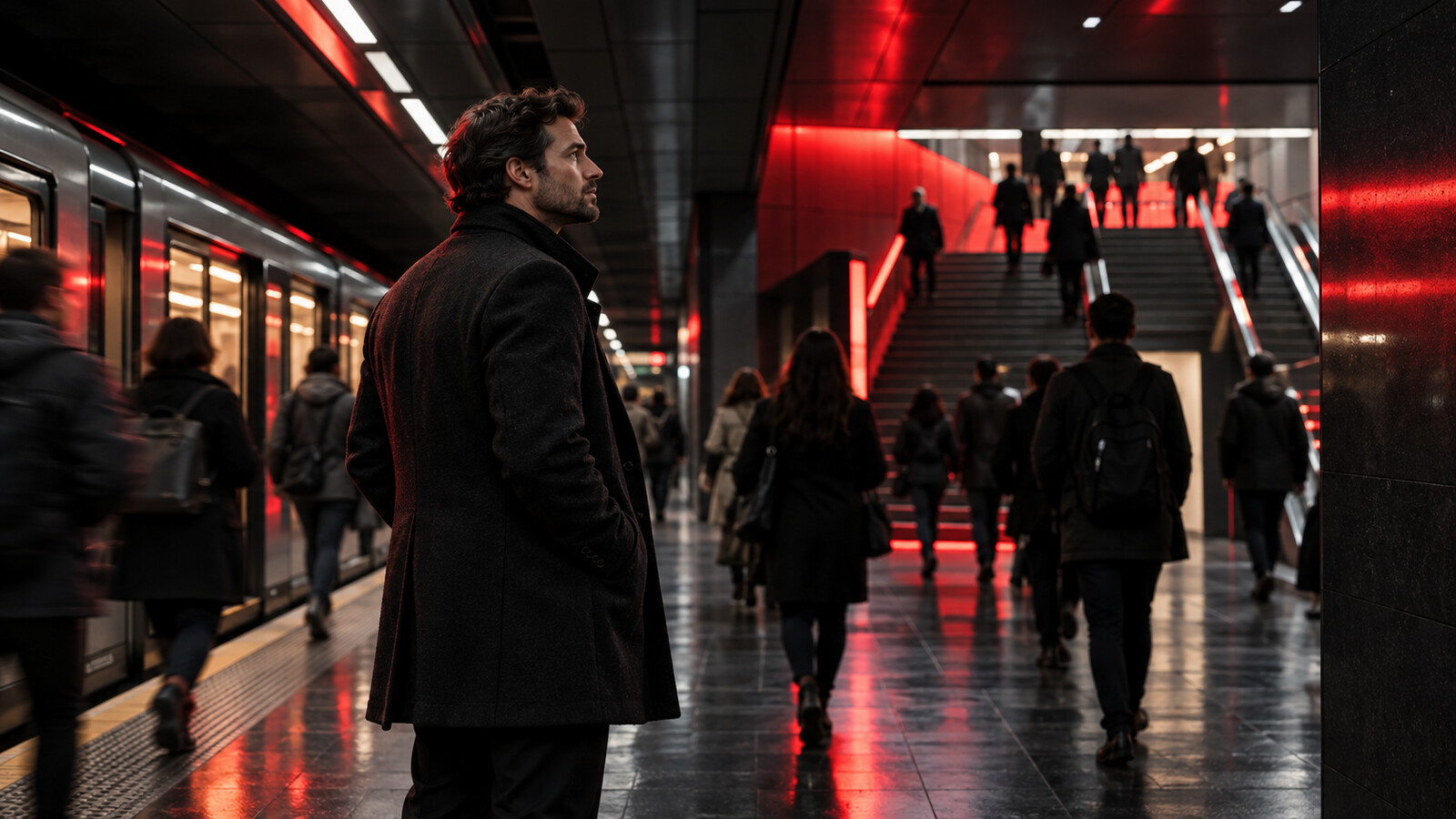
Situational awareness is not fear. It is calm contact with reality. A capable man knows where he is, notices what changes, protects his options, and leaves bad situations before ego turns them into emergencies.

Awareness Is a Masculine Responsibility
If you want the freedom to move confidently, travel, lead a date, protect your family, and handle pressure, you cannot outsource basic attention. You should know the nearest exit, the general mood, the path back to your car, and whether the environment has changed.
This is controlled aggression in preventive form. You are not hunting conflict. You are refusing to be surprised by obvious danger. The objective is not to prove toughness. The objective is to get yourself and the people with you home safely.
A man who needs to confront every disrespect is easy to manipulate. A man who can read the room, control his pride, and leave early keeps command. The same discipline taught in how to control anger without losing your edge applies here: aggression serves the mission, not the impulse.
Use the Baseline-and-Change Method
Every environment has a baseline. A coffee shop has a normal rhythm. A parking garage has expected sounds. A street at midnight has a different baseline than the same street at noon.
Your job is not to analyze every stranger. Establish what is normal, then notice meaningful change.
- Someone changes direction when you do.
- A person closes distance without a clear reason.
- A group’s attention suddenly fixes on you or your companion.
- An exit becomes blocked.
- The emotional tone shifts from loud to focused.
- An object, vehicle, or bag appears where it does not fit.
One odd detail may mean nothing. Several aligned details deserve action. Move toward light, staff, other people, or an open exit. Call someone. Change route. Do not wait for absolute proof when a low-cost adjustment protects your position.
Own Your Entrances and Exits
When you enter a restaurant, station, event, hotel, or parking structure, take five seconds:
- Locate the main exit and one alternative.
- Notice staff, security, lighting, and crowded areas.
- Keep your belongings controlled.
- Choose a position that does not trap you.
- Identify the simplest route out, not the most dramatic response.

In a parking area, have your keys ready before you reach the vehicle. Look into the car before entering. Do not sit with the door open while finishing messages. If something feels wrong, keep moving toward a staffed or populated place instead of walking straight to your car and revealing where you will stop.
Your Phone Is Making You Easier to Surprise
The phone-down rule is brutal and effective: if you are walking through an unfamiliar, isolated, transitional, or late-night space, the screen stays away. Check directions before moving. If you must look again, stop in a safe, visible position.
Use only one earbud when awareness matters, or none. Keep the volume low enough to hear footsteps, vehicles, announcements, and changes around you. Digital distraction already steals your productive attention. Read digital minimalism for men and stop donating your senses to a device.
Trust Discomfort, Then Verify With Action
Your intuition is not magic, but it can register patterns before you consciously name them. If a person, route, vehicle, or room feels wrong, create distance first. You can analyze later.
Use a simple test if you suspect someone is following you: make a safe, ordinary route change toward a public place. Cross the street, enter a staffed business, or change train cars where permitted. Do not lead the person to your home. Do not stage a confrontation to protect your pride.
If the pattern continues or you feel threatened, contact emergency services or local security and describe your location, direction, clothing, and what you observed. Clear reporting beats vague panic.
Lead Without Creating Panic
Set the standard on dates and travel
Before a date or trip, know the address, transport plan, closing time, and route home. Park in a lit area when possible. Keep enough battery and money to leave independently. Share essential travel details with a trusted person when the situation warrants it. These are not nervous rituals. They are basic logistics.
If the environment deteriorates, do not stay because changing plans might look uncool. Move the date, leave the venue, call the ride, or choose the busier route. Decisiveness is more attractive than pretending not to notice an obvious problem. Your companion should feel that you are engaged with the moment, not performing toughness for strangers.
When you are with a woman, friend, child, or group, do not announce every suspicion and flood the situation with fear. Give a clear instruction:
“We’re leaving through the front. Stay with me.”
Move with purpose. Explain once you are secure. Calm dominance is attractive because it reduces confusion and creates direction. It is not hostility. It is the ability to decide under pressure without broadcasting chaos.
That posture depends on the grounded frame developed in masculine frame. The more emotionally controllable you are, the more intelligently you can use forceful energy.
Train Awareness Like a Skill
Awareness improves through repetition. Use these drills without acting suspicious or invasive.
- Exit drill: identify two exits within ten seconds of entering a public place.
- Recall drill: after leaving a room, name three people, two objects, and one change.
- Phone drill: complete every parking lot and transit transition with the phone away.
- Route drill: know one alternative way home.
- Description drill: practice describing a person or vehicle using neutral observable facts.
The Seven-Day Awareness Standard
- Day one: keep your phone away during every street crossing and parking transition.
- Day two: identify exits in every building you enter.
- Day three: commute without sealed headphones.
- Day four: practice the recall drill three times.
- Day five: plan an alternate route for your normal commute.
- Day six: lead a companion through an unfamiliar place with calm direction.
- Day seven: review where distraction made you vulnerable and set one permanent rule.
Measure success by early decisions, not dramatic stories. The best confrontation is often the one your awareness prevented.
Conclusion: Wake Up and Own the Space Around You
You train, dress well, earn, and build status because you want control over your life. That control means little if you surrender your eyes, ears, and judgment every time a screen lights up.
Pay attention. Know the exits. Create distance early. Control your ego. Lead the people with you. A formidable man is not constantly looking for danger. He is difficult to surprise because he is actually present.
FAQs
Does situational awareness make you paranoid?
No. Healthy awareness is calm, proportionate, and evidence-based. Paranoia sees threat everywhere. Awareness notices changes and chooses low-cost protective action.
What should I do if I think someone is following me?
Move toward a populated, staffed location, change your route safely, avoid going home, and contact security or emergency services if the pattern continues or you feel threatened.
Should I confront suspicious people?
Usually, distance and exit are smarter. Confrontation can escalate uncertainty into danger. Your objective is safety and control, not proving courage to a stranger.


Leave a Reply