
Ryan finished his first month in the gym and expected the mirror to confirm that everything had changed. His numbers were improving. His shirts felt tighter after training. Under normal morning light, he still looked almost the same.
Then he opened social media and saw a twelve-week transformation that looked like several years of progress. For the first time, Ryan wondered whether he had bad genetics or the wrong program.
The real question is simpler: are you trying to look impressive in thirty days, or build a body you can keep for ten years?

The Short Answer
Many beginners feel stronger within two to four weeks because skill and neural efficiency improve quickly. Small visual changes may appear after roughly two to three months. More obvious changes often require six to twelve months. A dramatically different natural physique usually takes years.
Those are broad expectations, not promises. Age, genetics, starting body composition, training quality, calories, protein, sleep and previous experience all change the timeline.
Building muscle improves male attractiveness and physical presence. That makes it worth pursuing. It does not make the process fast.
What Changes During the First Year
Weeks 1 to 4: Skill and Neural Adaptation
You learn to brace, control load and recruit the right muscles. Strength can rise before substantial hypertrophy is visible. Use this phase to build technique instead of proving how much weight you can survive.
Months 2 to 3: Early Visual Change
Shoulders, arms, chest, back and legs may begin looking fuller. Comparison photos show change better than a daily mirror.
Months 4 to 6: Other People Notice
Clothes fit differently and your main lifts should be meaningfully stronger. This is also where careless programming begins to stall because easy beginner progress slows.
Months 7 to 12: A Clear Beginner Transformation
A full year of consistent work can create an obvious change. You still will not look like an advanced bodybuilder. You should look and move like a man who trained seriously for a year.
Years 2 and Beyond: Slower, More Specific Progress
Each additional gain requires more patience and precision. Weak points become clearer. Progress is measured across months, not workouts.
Genetics Matter. They Are Not an Excuse.
Genetics influence frame, muscle shape, recovery and response rate. Age and training history matter too. None of that gives you useful information about what happens if you quit.
Compare your current month with your previous month. If lifts, measurements and technique are progressing, the program is working.
If nothing improves for six to eight weeks, audit attendance, effort, technique, food, protein, sleep and progression before blaming DNA.
The Training That Builds Muscle
The American College of Sports Medicine’s updated position stand emphasizes progressive resistance training and consistency while noting that many workable prescriptions can build strength and muscle. Read the ACSM position stand.
- Train major muscle groups repeatedly across the week.
- Use stable exercises you can progress.
- Take working sets close enough to failure that the final reps demand effort.
- Add reps, load, range or control over time.
- Keep enough exercises consistent to measure progress.
- Reduce volume when fatigue outruns recovery.
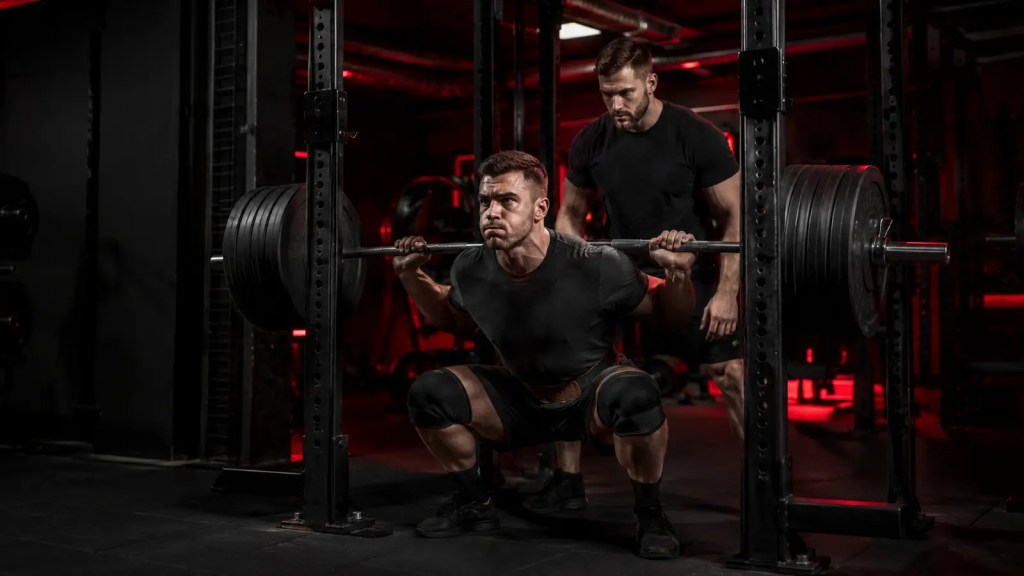
Controlled aggression is useful masculine fuel in the gym. Attack the set. Keep technique. Do not let ego turn hard training into reckless lifting.
How Much Protein Do You Need?
A practical target for many healthy lifting adults is roughly 1.6 grams of protein per kilogram of body weight per day. A large meta-analysis found that protein supplementation can improve gains during resistance training, while benefits above about 1.6 grams per kilogram per day were not clearly greater on average. Review the protein and resistance training meta-analysis.
Spread protein across several meals. Meat, fish, eggs, dairy, soy, beans, lentils and protein powder can all contribute.
Calories: Gain Without Getting Fat on Purpose
Beginners with higher body fat may gain muscle at maintenance or during a controlled deficit. Leaner trained men often benefit from a modest surplus.
More food is not automatically more muscle. If waist growth races ahead of performance, you are probably overshooting the surplus.
Track average morning weight. Add a small amount of food only when progress is truly flat. Use the V-taper workout guide if you want to prioritize shoulders and back.
Recovery Is Part of the Program
- Sleep: keep a regular schedule.
- Stress: reduce what repeatedly destroys training quality.
- Rest days: use them to recover.
- Pain: sharp or worsening joint pain deserves attention.
- Deloads: reduce load or volume when fatigue has accumulated.
How to Know You Are Gaining Muscle
- Take front, side and back photos monthly.
- Measure arms, chest, thighs and waist every four weeks.
- Track weekly average body weight.
- Record exercises, loads and reps.
- Notice how clothing fits across shoulders, back and legs.

Why Progress Looks Slower Than It Is
You see yourself daily. Higher body fat can hide muscle. Lighting changes everything. Social media adds pumps, posing, editing, selective angles, drugs and mislabeled timelines.
Ryan’s first three months did not produce a movie transformation. They produced better technique, stronger lifts and visible change in comparison photos. By month nine, other people noticed.
Useful Tools for Supporting and Measuring Progress
The fundamentals remain training, protein, appropriate calories and recovery. These tools can make execution easier.
- Whey protein powder: convenient when whole-food protein is difficult to reach.
- Creatine monohydrate: a simple addition for men who choose to include creatine.
- Smart bodyweight scale: track long-term weight trends.
Frequently Asked Questions
Can I build noticeable muscle in three months?
Many beginners can create visible improvement in three months, especially in comparison photos. A major transformation usually takes longer.
Do beginners need to bulk?
Not always. Starting body fat and training history matter.
How often should I change my workout?
Keep effective exercises long enough to measure progress. Change them when they cause problems or no longer serve the goal.
Final Word
Expect strength first, subtle visual change next and obvious natural development over many months and years.
Muscle grows slowly. The man with enough patience to keep training becomes physically unrecognizable to the man who demanded proof after thirty days.


Leave a comment