
Ethan had spent three years hiding inside loose shirts. He was not heavy enough to call himself fat and not muscular enough to look athletic. Every attempt to change made the problem worse. He starved himself until he looked smaller and softer, then “bulked” with takeout until his waist grew faster than his shoulders.
The skinny-fat trap is not mysterious. It is the predictable result of too little muscle, too much body fat for your frame, weak training, and nutrition without a clear objective. You do not need another identity crisis. You need body recomposition executed with discipline.
Your mission is simple: build measurable strength, eat enough protein, control calories, and stop changing the plan every ten days. The soft look disappears when your body finally receives a consistent reason to carry muscle and a controlled reason to surrender fat.

Stop Choosing Between Getting Smaller and Getting Fatter
Most skinny-fat men make one of two emotional decisions. They see their stomach and slash food. The scale drops, but the shoulders flatten, the chest disappears, and the body still lacks shape. Or they see their thin arms and start eating everything. Body weight rises, but most visual improvement lands around the waist.
Body recomposition gives you a harder target: lose fat while maintaining or building lean mass. Beginners, men returning after a layoff, and men whose training has never been structured have the best opportunity. Advanced lifters may need more distinct phases, but the fundamentals remain the same.
Do not use the word “recomposition” as permission to avoid measurement. Your waist should move down, your lifts should move up, and your photographs should improve. If none of those changes across eight weeks, you are not recomposing. You are waiting.
Train to Create a Muscular Frame
Your physique needs shape. Prioritize shoulders, upper chest, back, legs, and glutes while training the entire body. A broader upper body and stronger lower body change how your waist looks before you reach extreme leanness.
Lift three or four days per week. Build each session around stable compound movements, then add focused work where your frame needs it. A simple three-day template works:
- Day A: squat, bench press, row, lateral raise, curl.
- Day B: Romanian deadlift, overhead press, pull-up or pulldown, split squat, triceps work.
- Day C: leg press, incline press, chest-supported row, hip hinge, rear-deltoid work.
Use controlled repetitions and keep most working sets one to three clean repetitions away from failure. Write down the load and repetitions. Add a repetition or a small amount of weight when you earn it. The system in progressive overload for men turns random exercise into a reason for your body to grow.

Eat Like the Outcome Matters
Set a Controlled Calorie Target
If your waist is clearly carrying excess fat, begin with a modest calorie deficit. Aim for slow loss, not a crash. If you are very light with only a slight softness, maintenance calories may be enough while training quality rises. Hold the target for two weeks before judging it.
Use the weekly average of morning weigh-ins, not one emotional reading after a salty meal. Measure your waist at the navel once per week under the same conditions. The guide to losing fat without sacrificing muscle gives you the broader structure when fat loss must lead the phase.
Make Protein Nonnegotiable
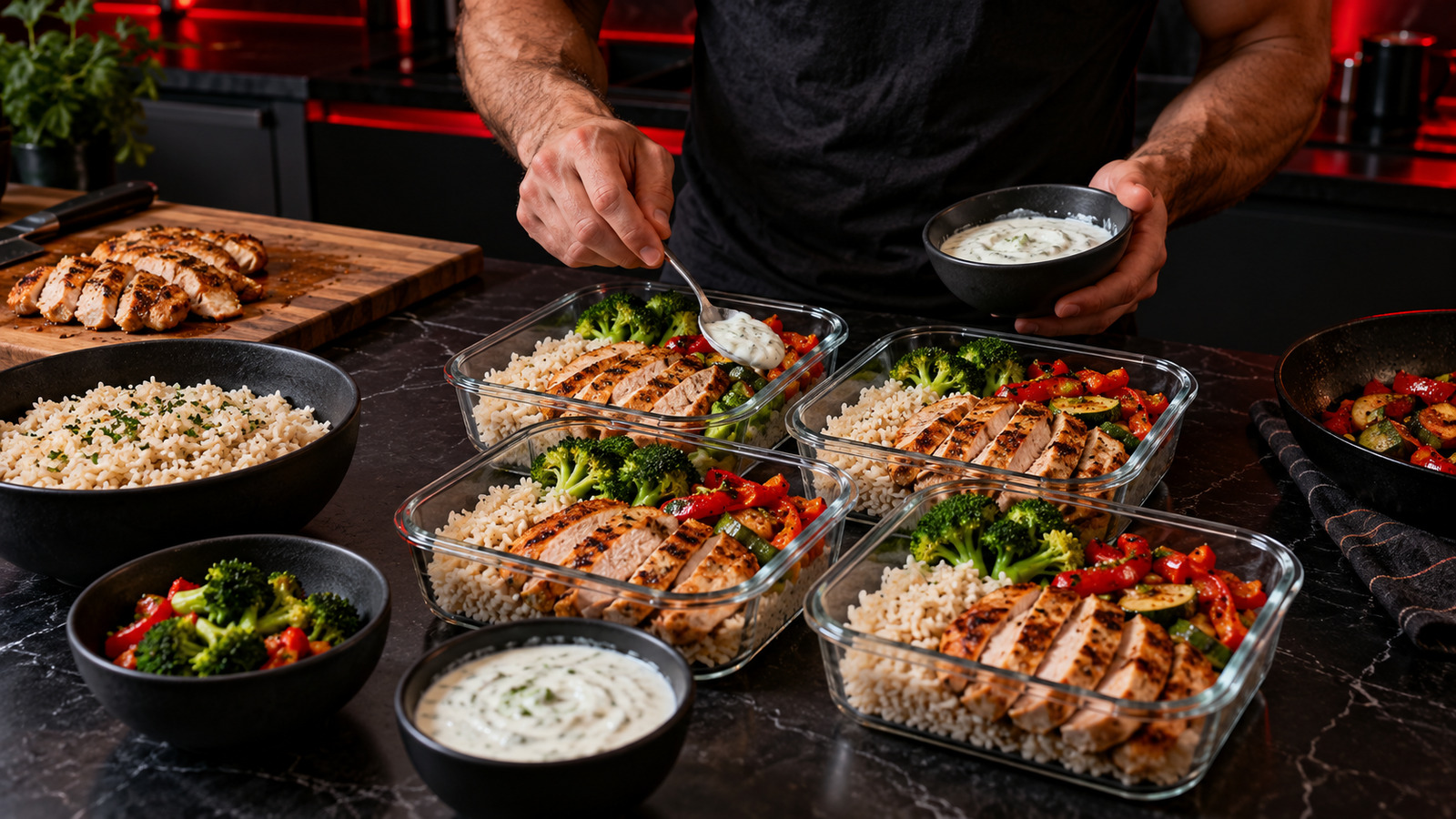
Build every meal around a serious protein source. A practical daily range for active men is roughly 1.6 to 2.2 grams per kilogram of body weight, adjusted for appetite, body size, and calorie intake. Spread it across three to five meals so protein is not an afterthought at dinner.
You do not need expensive food theater. Eggs, lean meat, fish, dairy, beans, and other protein-dense staples can carry the plan. Use the same discipline found in a high-protein meal plan on a budget: repeat dependable meals, prepare food before hunger makes the decision, and know the portions you are eating.
Use Cardio Without Turning It Into Punishment
Walk daily and add two or three moderate conditioning sessions if recovery allows. Cardio helps create energy expenditure, improves work capacity, and lets you eat a more livable amount of food. It should support your lifting, not destroy your legs before every strength session.
Aim for a consistent step count and increase it only when progress stalls. If you want strength and endurance together, use the planning principles in hybrid training for men. More work is useful only when you can recover from it.
Recover Like a Man Who Wants Results
You cannot out-program five hours of sleep, weekend drinking, and constant stress. Muscle is built after training when food and recovery make adaptation possible. Set a fixed sleep window. Keep alcohol rare. Leave enough time between hard sessions for performance to return.
If your lifts fall for two weeks, soreness never clears, and motivation collapses, do not call yourself weak. Review sleep, calories, exercise volume, and technique. Discipline includes removing useless work, not collecting fatigue as proof of masculinity.
Run the Eight-Week Recomposition Order
- Take front, side, and back photographs in the same light.
- Record body weight for seven mornings and calculate the average.
- Measure your waist and write down starting loads for six major movements.
- Choose three or four weekly lifting sessions and put them on the calendar.
- Set calories and protein, then repeat the plan for fourteen days.
- Adjust calories by a small amount only if waist, weight, and performance show no useful trend.
- At week eight, compare photographs, waist, average weight, and training numbers.
Your scoreboard is four numbers: waist, weekly body-weight average, key-lift performance, and sessions completed. The mirror matters, but memory lies. Photographs and measurements expose whether your effort is producing the body you claim to want.
Do not compare your eighth week with another man’s eighth year. Compare it with your own starting data. The objective is not to win an imaginary contest online. It is to become visibly stronger, leaner, and harder to recognize through work you can repeat.
Frequently Asked Questions
Should a skinny-fat man cut or bulk first?
If your waist is the dominant problem, use a modest deficit while lifting hard. If you are very light and only mildly soft, begin near maintenance. Stop using aggressive extremes to avoid the slower work.
How quickly should I expect change?
Expect measurable progress across months, not a total transformation in two weeks. Your first eight weeks should show better training numbers, a smaller waist, improved photographs, or a combination of all three.
Do I need to train six days per week?
No. Three or four focused sessions beat six inconsistent sessions filled with junk volume. Choose the schedule you can attack and recover from.
Build the Body Instead of Hiding It
The skinny-fat look is not your permanent identity. It is your current starting point. Stop dressing around it, complaining about genetics, and replacing the plan whenever discomfort arrives.
Train with progression. Eat with precision. Walk. Sleep. Measure. Hold the line for eight weeks before you earn the right to adjust it. The result is bigger than a tighter waist. You build a stronger frame, a more attractive presence, and proof that your body responds when your orders stop changing.


Leave a Reply