EDT vs EDP vs parfum looks like a simple strength ladder. It is not.
Concentration changes how a fragrance can project, develop, and last, but the letters on the bottle do not tell you everything about the formula.
The right choice depends on where you will wear it, how much presence you want, and how the exact fragrance behaves on your skin.
Stop assuming parfum is automatically best because it sounds stronger or costs more. Buy for your life, not for the label.
The Quick Answer
| Type | Typical Fragrance Concentration | General Character | Best Fit |
|---|---|---|---|
| Eau de Toilette (EDT) | About 5% to 15% | Brighter opening, lighter body, often more initial lift | Daytime, office, warm weather |
| Eau de Parfum (EDP) | About 10% to 20% | Fuller body, stronger depth, often longer wear | Versatile daily use, evenings, cooler weather |
| Parfum or Extrait | About 15% to 40% | Rich, concentrated, often closer to the skin | Formal settings, close range, long wear |
These are typical industry ranges, not laws. The International Fragrance Association explains that concentration terms are not strictly standardized around the world. One brand’s powerful EDT can outlast another brand’s EDP.
Test the actual scent. The man who buys from the label alone is paying for assumptions.
What Is Eau de Toilette?
Eau de toilette usually uses a lower concentration of aromatic material than EDP or parfum. It often opens with more brightness and air.
Citrus, herbs, and fresh notes can feel sharper and more energetic, which makes many EDTs easy to wear during the day or in warm weather.
Do not confuse lighter with weak. Some EDT formulas project hard during the first few hours. That can be useful when you want a clean, noticeable presence without the density of a sweeter evening scent.
The tradeoff is that the fragrance may fade sooner or need one controlled reapplication later in the day.
Choose EDT when:
- You work in a close office and want a cleaner, lighter scent.
- You live in a hot climate or need a summer fragrance.
- You prefer a bright opening over a dense dry-down.
- You do not mind reapplying after several hours when necessary.
What Is Eau de Parfum?
Eau de parfum usually contains a higher concentration than EDT and often emphasizes the heart and base of the composition.
It can feel smoother, deeper, and more complete after the opening settles. For many men, EDP is the most practical middle ground.
A good EDP can handle work, dinner, dates, and most social situations without demanding constant reapplication. It is often the safest first purchase when you want one bottle to cover a large part of your life.
That does not mean every EDP is restrained. Sweet, spicy, or amber-heavy formulas can become aggressive if you spray them like a light EDT.
Choose EDP when:
- You want one versatile fragrance for day and evening.
- You value stronger longevity without always wearing a heavy scent.
- You prefer richer woods, aromatics, amber, or spice.
- You want a dependable starting point for a small collection.
What Is Parfum or Extrait?
Parfum, sometimes labeled extrait de parfum, generally uses the highest concentration. It often develops slowly, lasts well, and sits closer to the skin than people expect.
Higher concentration does not always mean louder projection. Many parfums trade a sharp opening for a denser, more controlled scent bubble.
This category makes sense when you value refinement, close-range impact, and fewer sprays. It can work well for dates, formal events, and colder conditions.
The price per bottle is usually higher, so test it on skin before committing. A concentrated version can smell noticeably different from the EDT or EDP that shares its name.
Choose parfum when:
- You want depth and long wear more than a bright opening.
- You prefer a closer, more controlled scent trail.
- You attend formal events or want a dedicated evening bottle.
- You are willing to pay more for a version you have tested and genuinely prefer.
Concentration Does Not Tell the Whole Story
Fragrance performance depends on the formula, not just the percentage.
Citrus materials can disappear faster than heavy woods, resins, musks, and amber notes. Skin dryness, temperature, humidity, clothing, and spray location all change the result.
An EDT built around strong woods may outlast a soft EDP.
Brands may also rebalance notes between versions. The EDP is not always the EDT with more oil. It may use different ingredients, emphasize a new accord, or create a darker character.
Smell every concentration as its own fragrance.
Which Concentration Fits Each Situation?
| Situation | Best Starting Point | Reason |
|---|---|---|
| Office or classroom | EDT or restrained EDP | Cleaner projection and easier control in close spaces |
| Hot weather | EDT | Freshness and lighter body usually suit heat |
| Daily signature scent | EDP | Strong balance of versatility and longevity |
| Date night | EDP or parfum | More depth and stronger close-range character |
| Formal event | Parfum | Controlled richness and lasting presence |
| Cold weather | EDP or parfum | Deeper notes hold up better in low temperatures |
This is about calibration. A man with real presence does not need the strongest possible concentration in every room. He needs the version that fits the environment.
How to Test Before You Buy
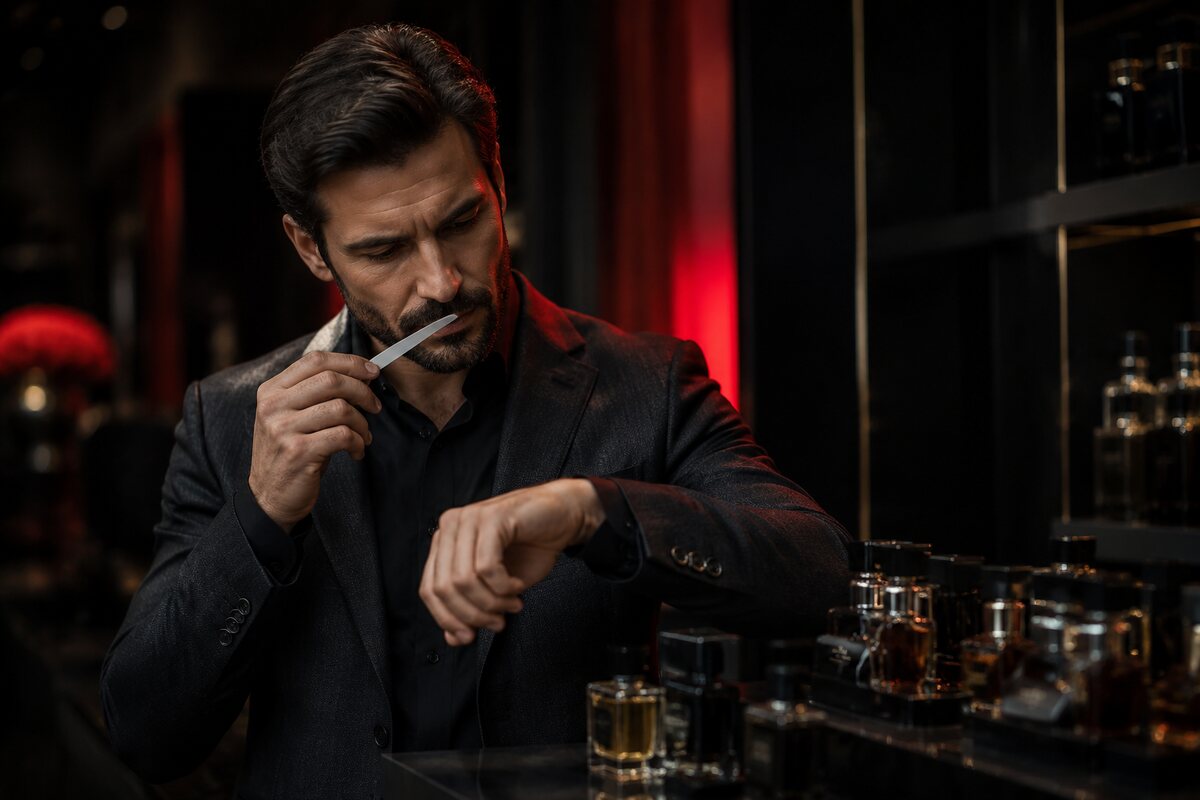
- Spray once on clean skin, not only on a paper strip.
- Wait through the opening for at least 30 minutes.
- Check the scent again after two, four, and six hours.
- Notice projection at conversation distance, not with your nose pressed to your wrist.
- Wear it in the weather and setting where you plan to use it.
- Buy only after you know you enjoy the dry-down.
Paper strips help compare openings. Skin reveals development and performance.
Do not buy an expensive bottle because the first five minutes impressed you. You will live with the dry-down far longer than the opening.
How Many Sprays Should You Use?
Start with two to four sprays and adjust.
A bright EDT may tolerate more than a dense parfum, but the exact bottle and room decide the final number. Read How to Make Cologne Last Longer Without Overspraying before increasing the dose. Better preparation often solves the performance problem.
What Should a Man Buy First?
If you are buying one bottle, start by testing the EDP. It usually offers the strongest balance of presence, versatility, and longevity.
If your life is mostly hot weather, daytime work, or close indoor spaces, compare the EDT. If you already own a daily scent and want a richer evening option, test the parfum.
Then build around roles. A useful collection covers situations instead of repeating the same profile. A three-fragrance rotation gives you a daily scent, a warm-weather option, and an evening scent without wasting money on ten bottles that do the same job.
For specific examples across those roles, use the best colognes for men guide. Test the concentration you can control and actually enjoy.
Fragrance Is an Attraction Tool, Not a Personality
A better concentration can improve projection, longevity, and how polished you smell at close range. That can strengthen attraction and presence. Use the advantage.
Do not confuse the tool with the man.
Your physique, grooming, clothes, confidence, eye contact, social competence, and the way you carry pressure still matter more. Pheromone colognes can also be used as attraction and presence tools, but the same rule applies: enhancements work best on a strong base.
Build muscle. Improve the face and grooming. Choose a fragrance concentration that fits the room. Then let the whole presentation work together.
Frequently Asked Questions
Does EDP always last longer than EDT?
No. EDP often lasts longer, but ingredients, formula, climate, and skin can reverse the result. Compare the exact versions on your own skin.
Is parfum too strong for the office?
Not automatically. Some parfums project less than EDTs but last longer near the skin. Formula and spray count matter more than the label alone.
Is EDT better for summer?
Often, yes. Its brighter and lighter character can work well in heat. Still, a heavy EDT can overwhelm while a restrained EDP can perform cleanly. Test first.
Which concentration is best for dates?
EDP and parfum are common strong choices because they often bring more depth and close-range character. The best option is still the specific version that smells good on your skin and fits the setting.
The Bottom Line
EDT gives you brightness and flexibility. EDP gives most men the best balance. Parfum gives depth, control, and long wear.
None is automatically superior.
Choose the concentration that serves the situation, performs well on your skin, and lets you smell intentional rather than excessive.
Sources: IFRA concentration guidance


Leave a Reply